
African Trade in a Changing World
As global trade fractures along new fault lines, driven by US tariffs, supply chain realignments and shifting geopolitical blocs, Africa sits at a critical juncture. The continent's trade corridors, capital markets, natural resources and expanding workforce give it greater strategic weight today than at any point in a generation. Programmes like Manufacturing Africa have already helped close £2 billion in FDI and create over 100,000 jobs, proof that the opportunity is real and the momentum is building.
About the event
The question is no longer whether Africa matters to global trade. It is whether Africa can shape the terms on which it participates. Development finance reform, critical minerals demand, digital infrastructure expansion and new South-South partnerships are creating openings, but the gap between capital available and capital deployed, and between knowledge created and value commercialised, remains wide.
This closed-door dialogue convenes investors, business leaders, policymakers and capital allocators committed to closing that gap. Held at Birkbeck University of London, our academic partner for this event, the dialogue features an opening keynote address by Professor Dame Ijeoma Uchegbu DBE, President of Wolfson College, University of Cambridge.
Themes we will explore
Global Context: How shifting geopolitics and capital flows are reshaping the operating environment for African businesses and investors
Doing Business on the Ground: What building and scaling businesses across African markets looks like in practice, from manufacturing and financial services to digital infrastructure
Strategic Partnerships: How public and private capital can work together to accelerate sustainable growth across the continent
SPEAKERS
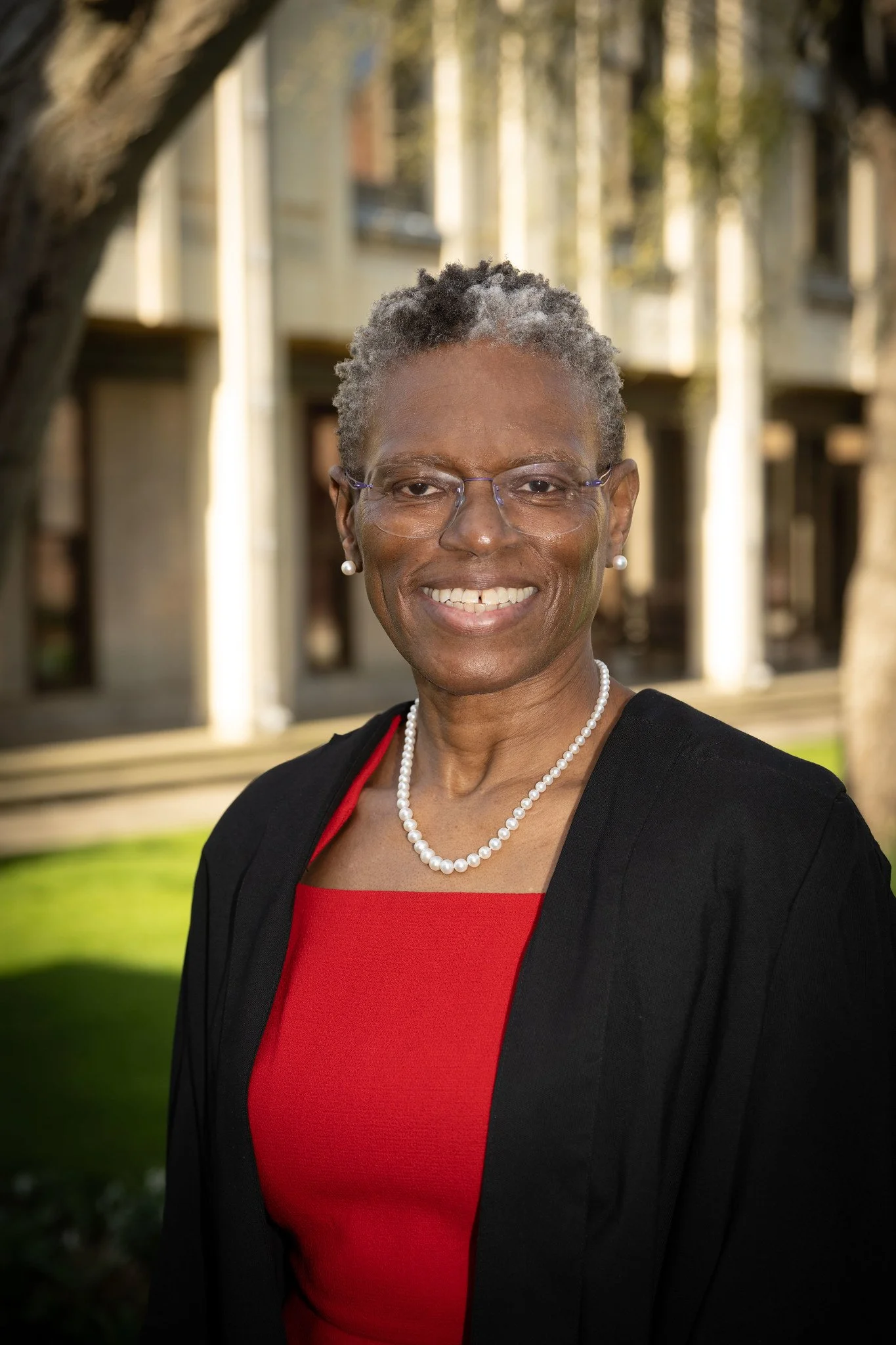
Professor Dame Ijeoma Uchegbu DBE
-
Professor Dame Ijeoma Uchegbu, DBE, FMedSci is President of Wolfson College, University of Cambridge, UCL’s Professor of Pharmaceutical Nanoscience, a fellow of the Academy of Medical Sciences, an honorary fellow of the Royal Society of Chemistry, a governor on the Wellcome board (one of the largest biomedical sciences research charities in the world), a member of the Biotechnology and Biological Sciences Council, as well as Chief Scientific Officer of Nanomerics Ltd, a company she co-founded.
Uchegbu is an inventor. Her company, Nanomerics Ltd, is a clinical-stage biotech company, developing medicines that address sight threatening illnesses, using technology Uchegbu invented in UK academia. Nanomerics has also out licensed medicines developed in her laboratory to a US pharmaceutical company. Technologies developed in Uchegbu’s laboratory have won prizes from the Royal Society of Chemistry and the Royal Pharmaceutical Society. Nanomerics Ltd. won the King’s Award for Enterprise 2024 in the Innovation category. The King’s Award for Enterprise is the UK’s most prestigious business award.
Uchegbu’s work has been featured in BBC Radio 4 programmes such as Desert Island Discs, The Life Scientific and BBC Radio 3’s Private Passions as well as on the BBC World Service’s Outlook and Lives Less Ordinary. Uchegbu’s work has also been featured in The Guardian and The Daily Telegraph. Uchegbu has served as Chair of the Academy of Pharmaceutical Sciences, Scientific Secretary of the Controlled Release Society, and she is the immediate past UCL Provost’s Envoy for Race Equality, a role in which she led on race equality work at UCL. Her work led to the removal of the names of prominent eugenicists from all of UCL’s buildings in 2020. Uchegbu has also presented to the UK House of Commons on the educational racial disparities that lead to a lack of ethnic minority representation in scientific research.
Uchegbu’s popular science book– Chain Reaction – was published by Hodder and Stoughton in 2026.
Uchegbu is listed in Bloomsbury Publishing’s Who’s Who.
Uchegbu was made Dame Commander of the British Empire (DBE) in the King’s New Years Honours 2025.
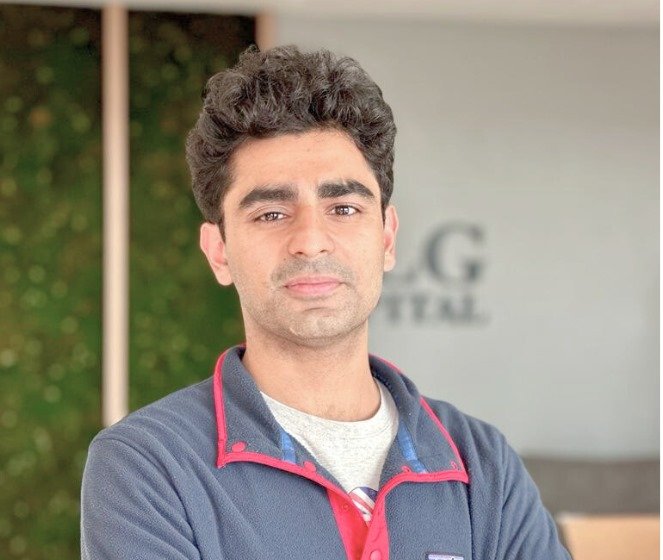
Aum Thacker
-
Aum Thacker is a senior investment professional at TLG Capital, where he has been a central architect of the firm's growth from $50 million to $220 million in AUM. Since joining from Oxford in 2018, he has executed more than a dozen investments totaling close to $80 million across eight African nations. Notably, his expertise in special situations and multi-jurisdictional enforcement has protected principal for investors even amidst sovereign defaults and severe currency devaluations. A pioneer in frontier market credit, he spearheaded the launch of Nigeria's first local currency private credit fund, a NGN $100 billion program backed by 17 pension funds, and co-led a $130 million stressed credit fund attracting sovereign wealth and development finance institutions.

Thaddeus Thompson
-
Thaddeus Thompson has spent more than 25 years leading clinical services and making the operating decisions that drive growth in healthcare. He has led neuroscience, orthopaedic and rehabilitation service lines at hospitals across the United States, including UF Health, Texas Health Resources and Mass General Brigham, where he authored strategic plans and oversaw inpatient admission and outpatient visit volumes. At Martha's Vineyard Hospital, part of Mass General Brigham, he was the Administrative Director for Clinical and Perioperative Services and the hospital's first Chief Diversity, Equity and Inclusion Officer, where he led the launch four new clinical services and grew diagnostic imaging and rehabilitation services by more than 30% in two years. He was Director of Neurosciences & Orthopaedics at Texas Health Resources, Administrative Director (Neuroscience Institute) and Director of Rehabilitation Services at UF Health Jacksonville. He started his management career as a Consultant with Ernst & Young.
He now runs two businesses. As Managing Director of Leland Healthcare Advisors & Consultants, he provides data analytics, performance improvement, business development and digital transformation services to healthcare, life sciences and biotech companies. As Chief Executive Officer of Leland Investment, he acquires and grows healthcare industry businesses. He has been a member of the African Business Trade Association's Advisory Committee on health since 2025.

Tom Fox-Chapman
-
Tom Fox-Chapman is the Impact, Results, and Learning Lead for Manufacturing Africa. He has over a decade of experience designing and implementing impact strategies for impact investors, donors, and businesses and successfully led complex, multi-million-dollar programs across sub-Saharan Africa, focusing on climate-smart solutions, results-based financing, and food systems. On Manufacturing Africa, Tom leads design and delivery of research to understand the systemic impact and delivery lessons learnt to adapt and inform current and future programming.

Dr Tim Weiss
-
Tim Weiss is an award-winning researcher and educator, currently an Assistant Professor in the Department of Management and Entrepreneurship at the Imperial College. His research programme investigates two fields of inquiry: Frontier Markets and Entrepreneurship. Tim’s work received the Distinguished Winner award for Responsible Research in Management by the Academy of Management Fellows. He has also been awarded the Aboyeji Medal by the Harambeans. He is a founding member of the Interdisciplinary Network for Technology and Entrepreneurship Research in African Societies and co-editor of the open-access book Digital Kenya: An Entrepreneurial Revolution in the Making.
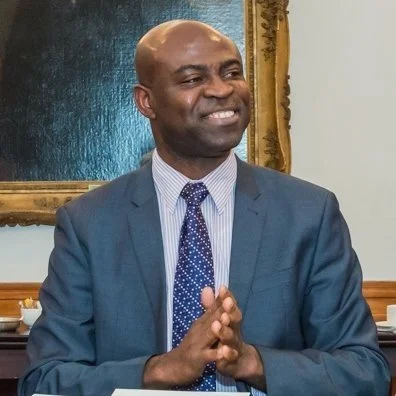
Professor Kevin Ibeh FCIM, FRSA
-
Professor Kevin Ibeh, PhD, FCIM, FRSA, is Professor of Marketing and International Business and former Pro Vice-Chancellor (International) at Birkbeck, University of London. He is also Commissioner of the Commonwealth Scholarship Commission, UK, where he recently led the founding of the Commonwealth Startup Fellowship scheme. An expert consultant/adviser to the World Bank, OECD, UNCTAD, African Union among others, Professor Ibeh contributed to the African Development Dynamics Reports 2023 and 2024, working with the African Union Commission and the OECD. He currently serves as the UK Representative to the Board of the European International Business Academy, Member of the British Council Higher Education Sector Group, Warwick Africa Hub’s External Advisory Board, and Lead Series Editor of the Palgrave Series on Entrepreneurship in Africa. Professor Ibeh previously chaired the Universities UK sub-Saharan African policy network, led UK academic departments, hosted major international scholarly conferences and guest-edited several influential journals. His research has mainly focused on advancing knowledge about firm internationalisation, international entrepreneurship, and Africa’s emerging multinationals, and has resulted in over 100 scholarly articles and four books.
Academic Partner

Register interest to attend